The bidding war for ‘living at home’
In this era where we focus on home care and almost sanctify ‘living at home,’ we rarely consider that we are gregarious beings, that we have needs for sharing that do us good... that smile that brightens the day, that even banal conversation that makes us forget our little worries... The fact is, living at home doesn't necessarily banish loneliness, that social cancer that lurks and where no one is safe. A true gangrene of post-industrial society, loneliness has become a modern epidemic resulting from hyper-connectivity and the erosion of traditional social ties. Horrifying!
Tuck in the elders!
Beyond this growing evil, this loneliness that stalks us as we age, some people find relief in staying at home, until the day when maintaining their beloved home becomes a nightmare. That's when the artillery comes in! The children, however well-intentioned, will want to place ‘pa pis mam’ in a se-cu-ri-tai-re place, as if being safe fulfilled all our desires...but who said that desire diminishes with age! And this devoted offspring will be searching for the most efficient and organized seniors' residence, the perfect RPA! It's worth remembering that the vast majority of these RPAs (8 out of 9) are commercial in nature; there are costs and, above all, inclusions and non-inclusions. All services will be detailed: from the distribution of pills, to the meal you choose to have between 4 and 5 p.m., from the activities whose times are posted on a sad bulletin board next to a cafeteria that will bring back bad memories of school, to the proposals for old people's outings by bus! We'll pay for all this and grow old sheltered, in heated, se-cu-ri-tary housing where when you open the door, you're faced with...a long corridor, the antechamber to the afterlife!
From living at home to living in a residence, isn't there an alternative where one can find their due?
Intergenerational living offers a commendable avenue, but it remains a marginal phenomenon. If we aspire to quality, we must also think in terms of numbers, be able to accommodate as many seniors as possible, and the solution must be accessible to house this growing population of 65 and over without alienating them.
Numbers that speak for themselves
In 2026, we will already be nearly 2 million ‘elders’, nearly a quarter of Quebec's population1 . That's a lot of people to pack in (a nod to RPA)! It must be said that even if we try our best, ‘living at home’ has already announced shortcomings: by 2035, an estimated 111,000 elderly people risk no longer having access to home care...Hello Imagine yourself in a beautiful golden cage, alone or with a partner. You're waiting for the auxiliary nurse to call and confirm an appointment, or worse, you're on a waiting list with no guaranteed dates. While it's easy to blame ‘the system,’ we have to agree that it can't fix everything. Support is needed.
Health and solitude are certainly challenges, but we must not forget those related to pleasure and fulfillment, which will drive us throughout our lives, regardless of our age.
A place where aging well will meet all these aspirations, and part of the solution lies somewhere between ‘living at home’ and RPA, Cohabitation!
Cohabitation
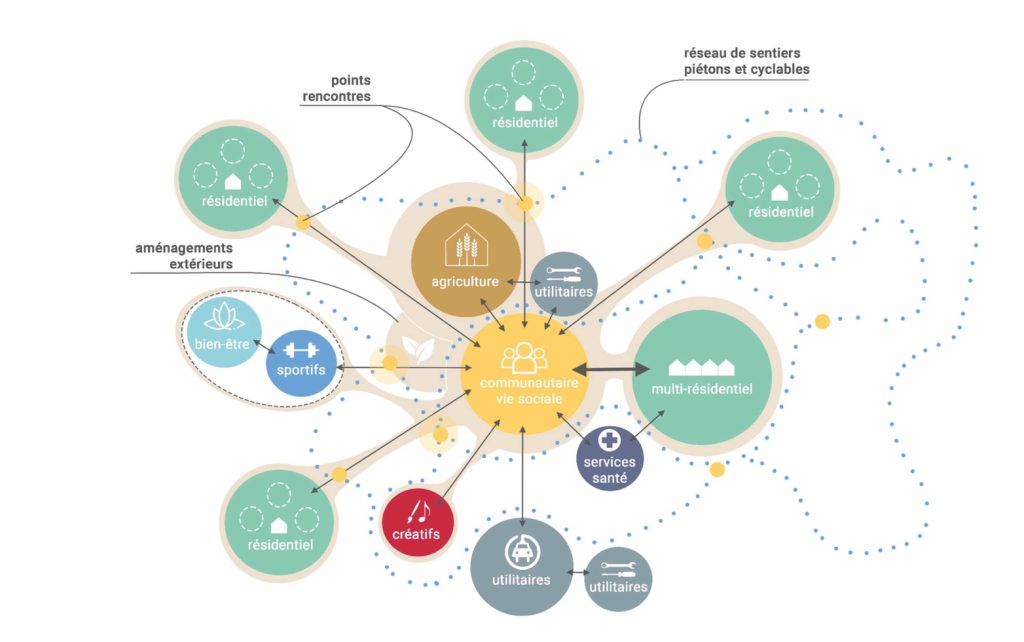
Future solution, Cohabitat2 allows for shared living while each person maintains their own home, by offering a living environment (each cohabitant will participate in decisions according to their ability to do so), as well as private living units with the comforts an elder has become accustomed to at home.
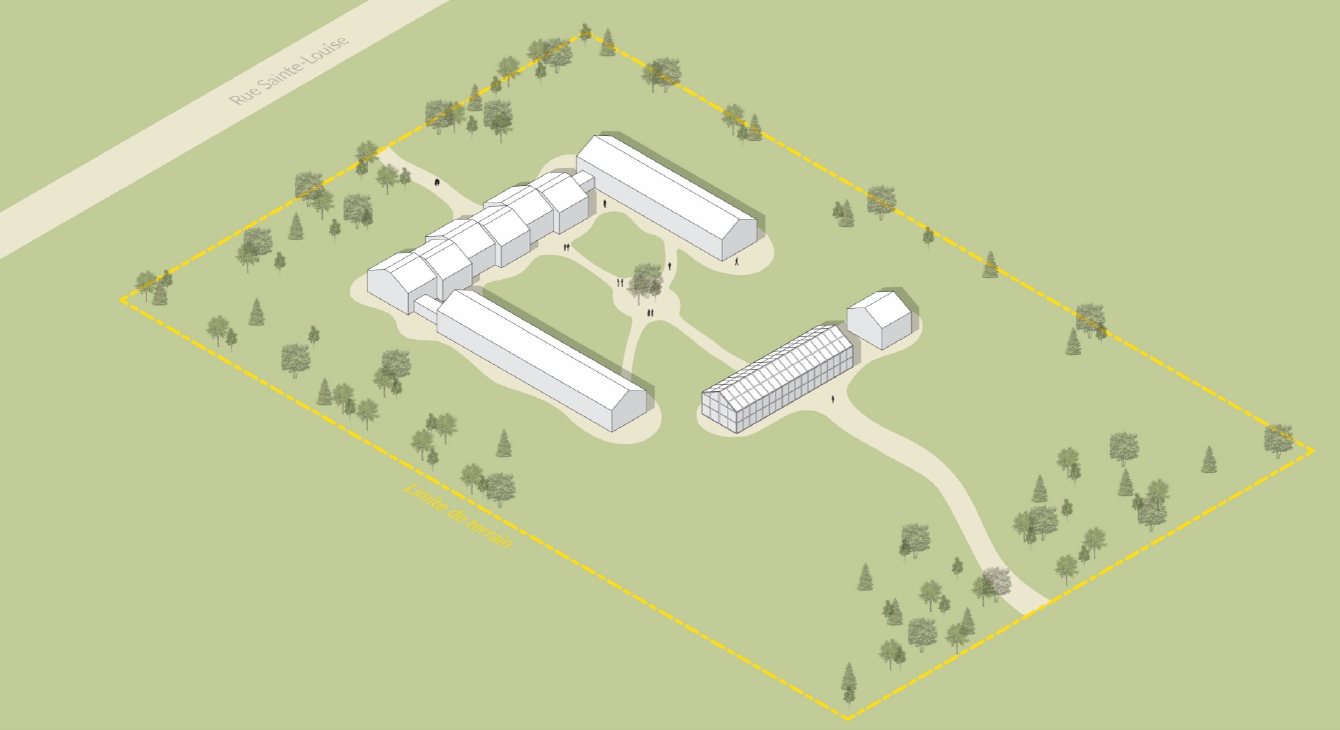
Co-housing is characterized by both respect for each individual's privacy and a sharing of resources; a common house with various services will be at its heart! In this house, we will find whatever the co-habitants want to see there. At Cohabitat Village VITAL, we have focused on health, prevention, and well-being. Art is not forgotten, nor are socialization activities.
This concern for maintaining our autonomy extends to our plates: we plan to have a greenhouse to supply the co-residents with organic vegetables year-round. A large ‘commercial’ kitchen will allow for food processing activities as well as convivial ones, like preparing meals together!
This is what the Cohabitat Village VITAL construction projects aim to offer, and even more. Our intention is for each of the Lanaudière region's RCMs to have its own ‘village’ one day.
Cohabitat Village VITAL also aims to be a business model so that other senior groups elsewhere in Quebec can one day adopt it!
For the common good, and for the elders who well deserve a space, a living environment that meets their expectations and their... desires!
1 1.8 million seniors aged 65 and over, representing 22% of Quebec's population – Statistics Canada
2 The term used varies by country or culture; the term ‘cohabitat’ comes from ‘cohousing’ and was translated by Cohabitat Québec upon its founding. In Europe, they speak of’Collaborative housing or,’Eco-village. In Germany, self-managed housing will be called ‘Baugruppen’. In Italy, they will talk about coliving, and in Holland, they will talk about a movement, Centraal Wonen, where 230 projects are specifically dedicated to those over 50 years old, they will say